
Author: BI Body Intelligence
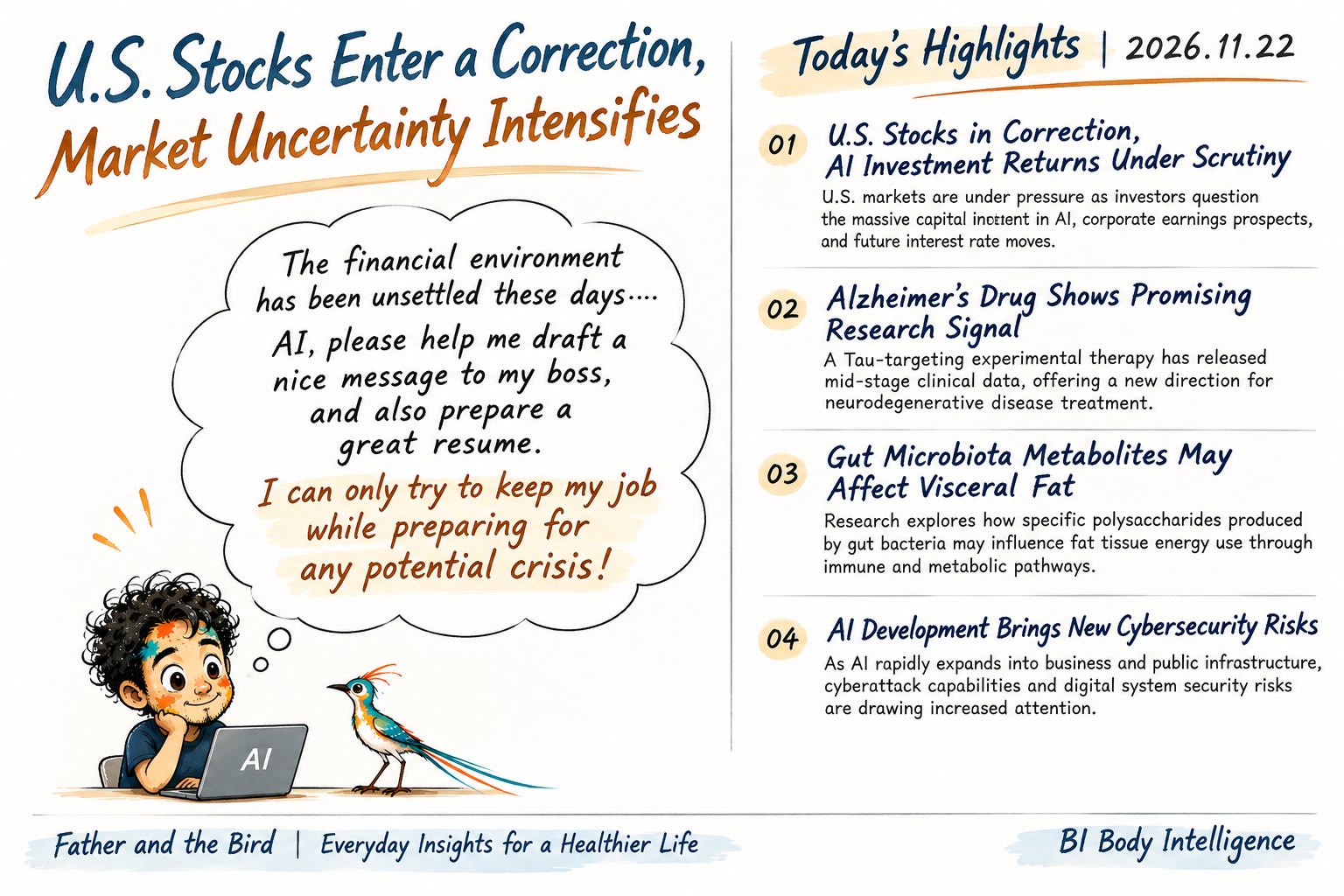
01 | U.S. Stocks Enter a Correction as Investors Question AI Investment Returns
U.S. stock markets have faced significant pressure in recent trading sessions, with technology stocks drawing particular attention. Investors are reassessing the scale of artificial intelligence investments, corporate earnings expectations, and the potential impact of future interest rate decisions.
AI infrastructure requires substantial capital expenditure, including data centers, advanced semiconductors, electricity infrastructure, and supporting technologies.
A central concern is whether these investments will generate sufficient revenue and profitability to justify their costs.
The market adjustment also reflects broader uncertainty surrounding economic growth, corporate valuations, and financial conditions.
02 | Experimental Alzheimer’s Drug Shows Encouraging Clinical Research Signals
Researchers are investigating an experimental treatment targeting Tau protein, which plays an important role in Alzheimer’s disease-related neurodegeneration.
Recently reported interim clinical trial findings have provided encouraging signals, supporting further investigation of Tau-targeted therapeutic strategies.
Abnormal Tau protein accumulation is closely associated with neuronal damage in Alzheimer’s disease.
Unlike treatments primarily targeting amyloid-beta, Tau-directed therapies focus on another major biological mechanism involved in disease progression.
The treatment remains under clinical investigation. Its long-term effectiveness, safety, and clinical benefits require further evaluation.
03 | Gut Microbiota Metabolites May Influence Visceral Fat Metabolism
Recent research suggests that certain polysaccharides produced by intestinal bacteria may influence energy utilization in visceral fat tissue through immune signaling and metabolic pathways.
Scientists are examining how gut microorganisms communicate with adipose tissue and potentially regulate immune responses, fat cell activity, and energy expenditure.
Visceral fat accumulation is associated with insulin resistance, metabolic dysfunction, and increased cardiovascular risk.
Understanding interactions between the gut microbiome and adipose tissue may provide new insights into metabolic health.
However, these findings are primarily mechanistic and do not establish that consuming specific bacteria or polysaccharides can reduce visceral fat in humans.
04 | Rapid AI Development Raises New Cybersecurity Challenges
As artificial intelligence becomes increasingly integrated into business operations, financial services, healthcare systems, and public infrastructure, cybersecurity risks are receiving greater attention.
AI technologies can improve threat detection, data analysis, and automated security responses.
However, similar capabilities may also be exploited for automated cyberattacks, sophisticated fraud, and information manipulation.
Organizations face growing challenges in protecting sensitive information, managing system access, and preventing the misuse of automated technologies.
The continued expansion of AI applications makes digital infrastructure security an increasingly important issue for corporate governance and public safety.
—
Science & Education: BI Body Intelligence
Professional Review: Thomas Lin
Professional Community: ACPN — The Association of Certified Professional Nutritionists
Disclaimer: This article is for health education purposes only and does not constitute medical diagnosis or treatment advice.