
Author: BI Body Intelligence
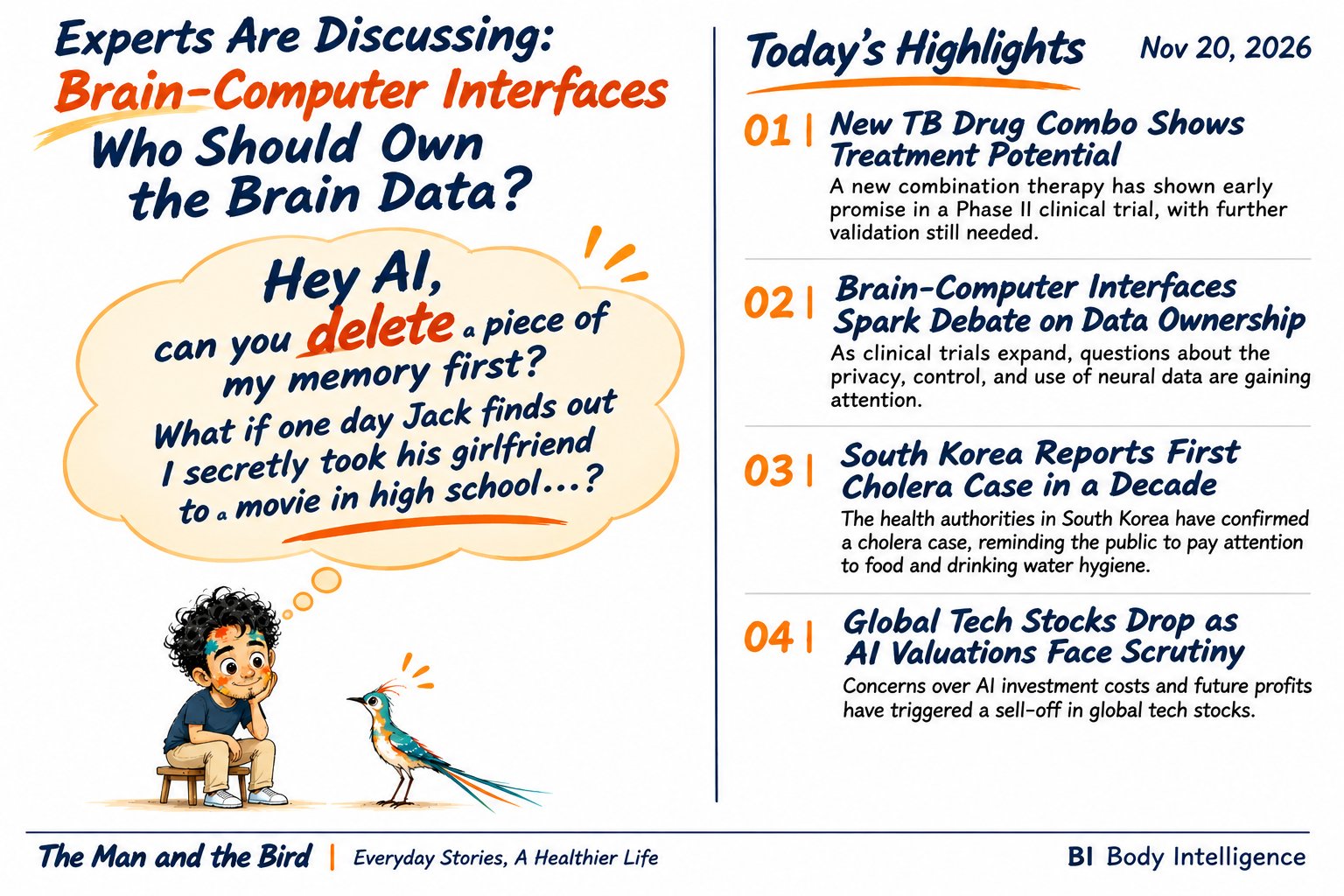
Today’s Highlights | November 20, 2026
01 | New Tuberculosis Drug Combinations Show Treatment Potential
New combination drug regimens have shown promising preliminary results in Phase II clinical trials, offering potential new directions for tuberculosis treatment.
Tuberculosis treatment typically requires multiple medications to improve effectiveness and reduce the risk of drug resistance.
Researchers are evaluating treatment efficacy, safety, and whether new regimens could potentially shorten treatment duration.
The findings remain preliminary, and larger clinical trials are needed before these approaches can be widely adopted.
02 | Brain-Computer Interfaces Raise Questions About Neural Data Ownership
As brain-computer interface technology advances into clinical research, questions about neural data ownership, privacy, and access rights are receiving increasing attention.
Brain-computer interfaces collect and analyze neural activity signals, potentially helping some patients communicate or control assistive devices.
However, important questions remain: Who should control these data? Should patients have the right to determine how their neural information is stored, shared, or deleted?
What limits should apply to the use of neural data by healthcare institutions and technology companies?
Current brain-computer interfaces cannot freely retrieve a person’s complete private memories. Nevertheless, advances in neural signal decoding make privacy protection and appropriate regulatory frameworks increasingly important.
03 | South Korea Reports Its First Cholera Case in a Decade
South Korean health authorities have reported a cholera case, drawing renewed attention to infectious disease surveillance and public health preparedness.
Cholera is an acute intestinal infection caused by the bacterium Vibrio cholerae. It is primarily transmitted through contaminated food and drinking water.
Severe infections can cause substantial fluid and electrolyte loss. Prompt rehydration treatment is essential to reducing serious complications and the risk of death.
A single confirmed case does not necessarily indicate a widespread outbreak. However, case investigation, infection-source tracing, and food and water safety measures remain important.
04 | Global Technology Stocks Decline as AI Valuations Face Scrutiny
Global technology stocks have experienced selling pressure as investors reassess the valuations and earnings prospects of artificial intelligence companies.
As investment in AI data centers, advanced chips, and computing infrastructure continues to expand, markets are paying closer attention to the relationship between capital expenditures and actual profitability.
Technological advancement does not necessarily translate into immediate or proportional increases in corporate earnings.
Future profitability, returns on investment, and the scale of infrastructure spending will remain important factors influencing AI-related stock valuations.
The Man and the Bird | Caring for Health in Everyday Life
Science & Education: BI Body Intelligence
Professional Review: Thomas Lin
Professional Community: ACPN — The Association of Certified Professional Nutritionists
Disclaimer: This article is for health education purposes only and does not constitute medical diagnosis or treatment advice.