
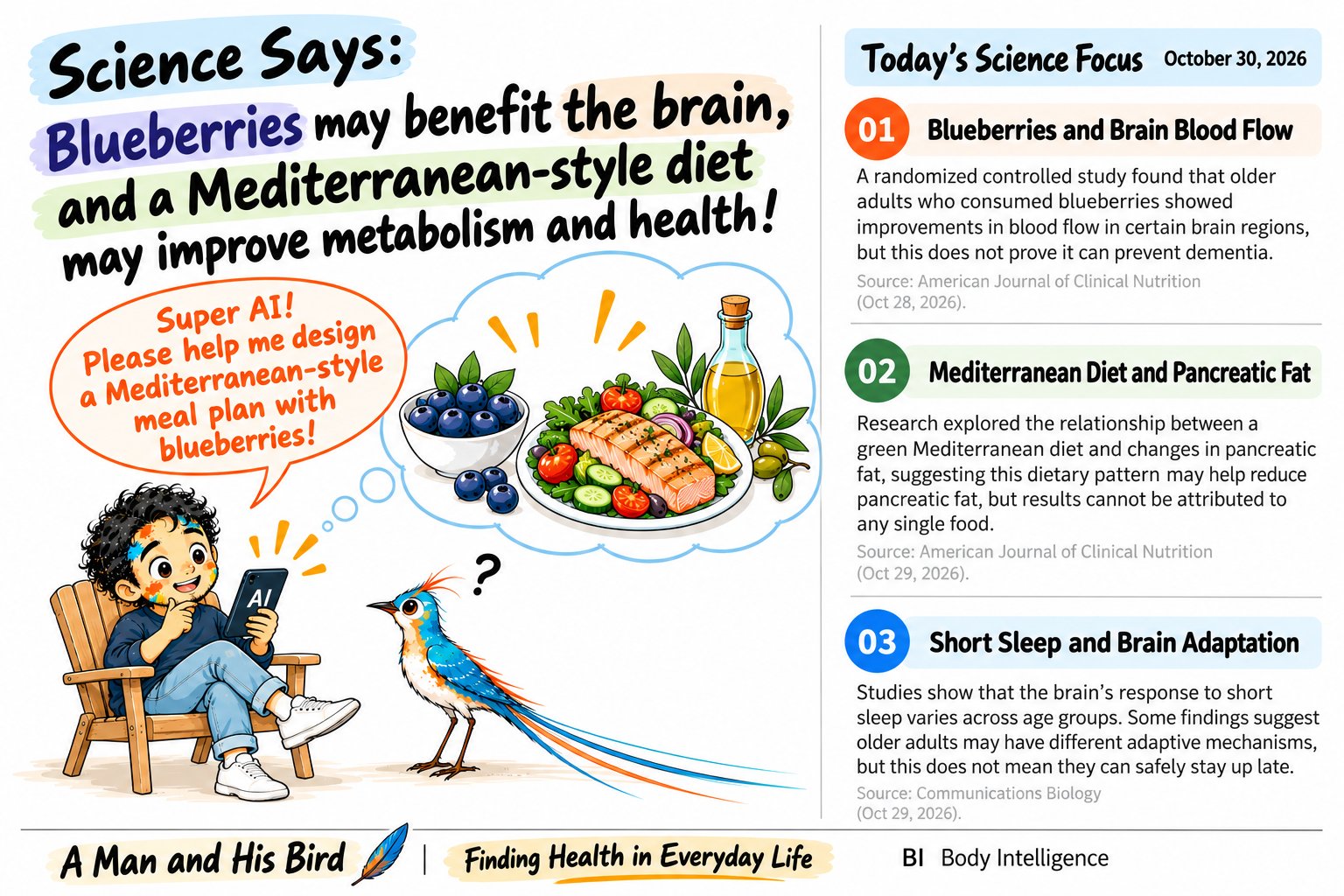
① Blueberries and Cerebral Blood Flow: New Findings from a Randomized Controlled Trial
A study published on October 28 in the American Journal of Clinical Nutrition investigated how blueberry consumption affects cerebral blood flow and related physiological markers in older adults.
Researchers observed improvements in blood flow measurements in certain brain regions, suggesting that bioactive compounds in blueberries may play a role in supporting cerebrovascular function.
However, improved cerebral blood flow does not necessarily translate into better cognitive performance. The findings do not establish that blueberries can prevent Alzheimer’s disease or other forms of dementia.
② Mediterranean Diet and Pancreatic Fat: Looking Beyond Individual Foods
A study published on October 29 in the American Journal of Clinical Nutrition examined the relationship between a green Mediterranean dietary pattern and changes in pancreatic fat.
The findings suggest that this dietary approach may help reduce pancreatic fat, providing further insight into the relationship between dietary patterns and metabolic health.
Importantly, the green Mediterranean diet involves a combination of foods and lifestyle factors. Its potential benefits cannot be attributed to olive oil, fish, vegetables, or any single ingredient.
A reduction in pancreatic fat also does not automatically establish a lower risk of diabetes. Changes in insulin sensitivity, glucose regulation, and long-term clinical outcomes require further evaluation.
③ Short-Term Sleep Restriction and Brain Adaptation: Does Age Make a Difference?
Research published on October 29 in Communications Biology explored how the brain responds to short-term sleep restriction across different age groups.
The findings identified differences in brain responses between younger and older adults, suggesting that aging may influence neurological adaptation to insufficient sleep.
However, different adaptive responses do not mean that older adults require less sleep or that chronic sleep deprivation is harmless.
Scientific Perspective
These three studies explore distinct aspects of human physiology: cerebrovascular function, organ fat distribution, and neurological responses to sleep restriction.
Together, they illustrate how health research is moving beyond individual nutrients and isolated symptoms toward a deeper understanding of organ function, metabolic regulation, and physiological adaptation.
Nevertheless, changes in biological mechanisms, improvements in research biomarkers, and meaningful long-term clinical benefits are not interchangeable.
Understanding these distinctions is essential when translating scientific findings into practical health decisions.
Science provides evidence. Healthy living requires informed, comprehensive judgment.
Science & Education: BI 身体智慧 (Body Intelligence)
AI-assisted Research & Illustration: BI × GPT
Professional Review: 林存默 (Thomas Lin)
Professional Community: ACPN — The Association of Certified Professional Nutritionists (加拿大注册执业营养师公会)
Disclaimer: This article is for health education purposes only and does not constitute medical diagnosis or treatment advice.