
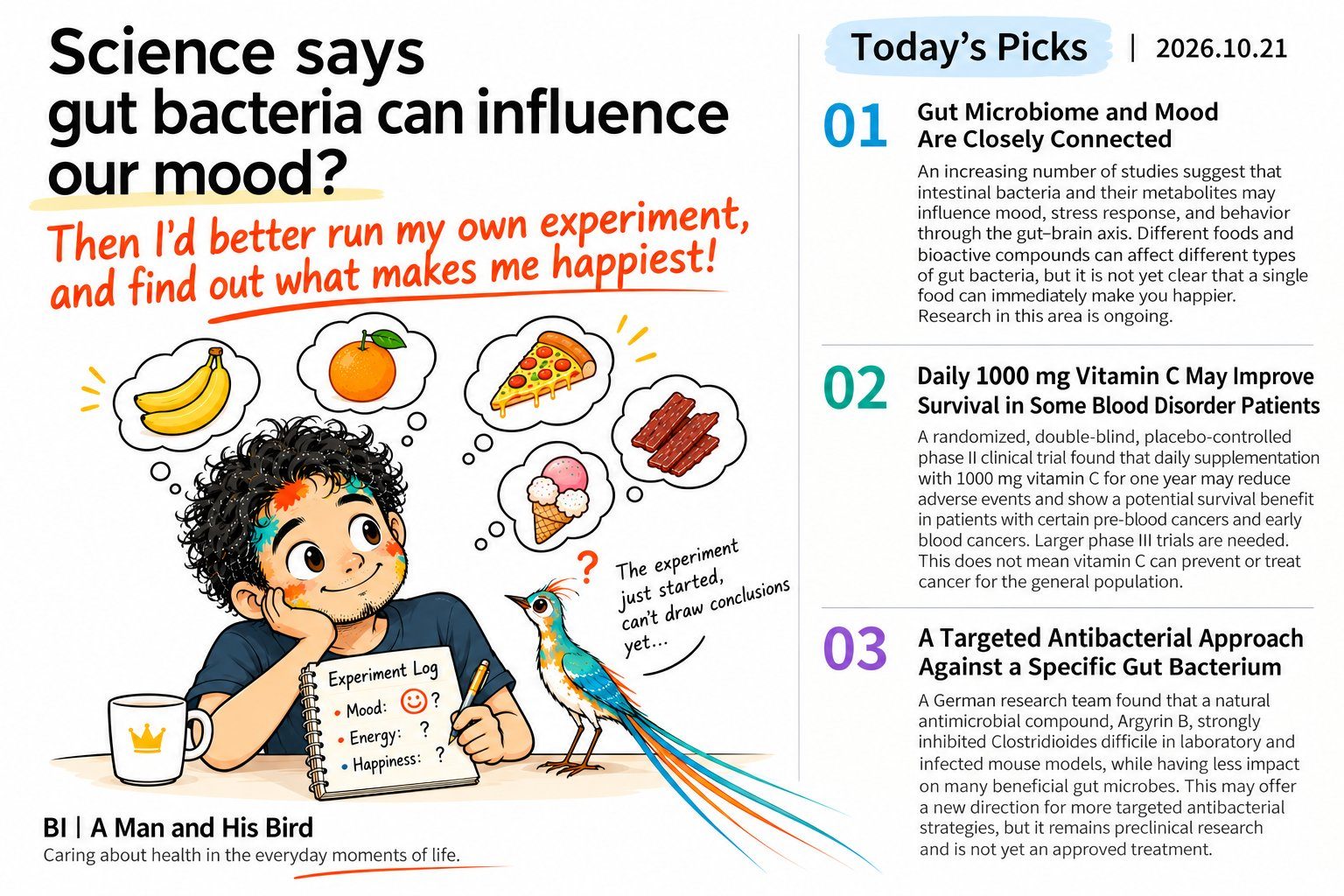
Today, we highlight three developments in health science: the relationship between gut microbiota and mood, vitamin C research involving certain blood disorders, and precision antimicrobial strategies targeting specific intestinal bacteria.
① Can Gut Bacteria Really Influence Our Mood?
Growing research suggests that the gut does more than digest food and absorb nutrients. Through the gut–brain axis, intestinal microorganisms may also participate in regulating mood, stress responses, and behavior.
Gut microbes produce or influence various metabolites, including short-chain fatty acids and tryptophan-derived compounds. These substances may communicate with the brain through neural, immune, and endocrine pathways.
Different foods and bioactive compounds can also influence the growth and metabolic activities of different intestinal microorganisms.
However, this does not mean that eating a particular food will immediately change the gut microbiome or improve mood.
Human emotions are influenced by many factors, including sleep, stress, hormones, neurotransmitters, and environmental conditions. The gut microbiome represents one important area of ongoing investigation.
② Could 1,000 mg of Vitamin C Daily Improve Outcomes in Certain Blood Disorders?
A randomized, double-blind, placebo-controlled Phase II clinical trial investigated vitamin C supplementation in patients with certain precancerous blood conditions and early-stage blood cancers.
Participants received 1,000 mg of vitamin C daily for one year under medical supervision.
The study reported fewer adverse events in the vitamin C group, while exploratory analyses suggested potentially improved survival outcomes.
However, the treatment did not demonstrate a significant reduction in abnormal blood cell expansion. The survival findings require confirmation in larger Phase III clinical trials.
These results do not establish that taking 1,000 mg of vitamin C daily can prevent or treat cancer in the general population.
③ Can Harmful Gut Bacteria Be Targeted Without Disrupting Beneficial Microbes?
Conventional antibiotics can control bacterial infections, but some also disrupt the normal intestinal microbiome.
Researchers in Germany are investigating a more selective antimicrobial approach.
A naturally derived compound called Argyrin B demonstrated strong inhibitory activity against Clostridioides difficile in laboratory experiments and infected mouse models, while having relatively limited effects on many other intestinal microorganisms.
C. difficile infections can cause severe diarrhea and colitis, particularly when the intestinal microbiome has been disrupted.
More selective antimicrobial treatments could potentially help control specific pathogens while preserving more of the normal microbial ecosystem.
However, this research remains preclinical. Argyrin B is not an approved treatment for C. difficile infection.
Today’s Scientific Perspective
These research developments highlight the increasingly recognized connections among intestinal microorganisms, metabolism, immune regulation, and neurological function.
However, understanding the microbiome requires more than simply classifying bacteria as beneficial or harmful.
The biological effects of microorganisms depend on their interactions with other microbes, their metabolic products, the host’s physiological condition, and environmental factors.
Likewise, no single food or nutritional supplement should be expected to resolve complex health conditions.
A central challenge in functional nutrition is understanding how microbial ecosystems, metabolic pathways, dietary components, and human physiology interact to influence health.
This is where emerging microbiome research may contribute to more personalized, evidence-based approaches to nutrition and health management.
Science & Education: BI 身体智慧 (Body Intelligence)
AI-assisted Research & Illustration: BI × GPT
Professional Review: 林存默(Thomas Lin)
Professional Community: ACPN — The Association of Certified Professional Nutritionists (加拿大注册执业营养师公会)