
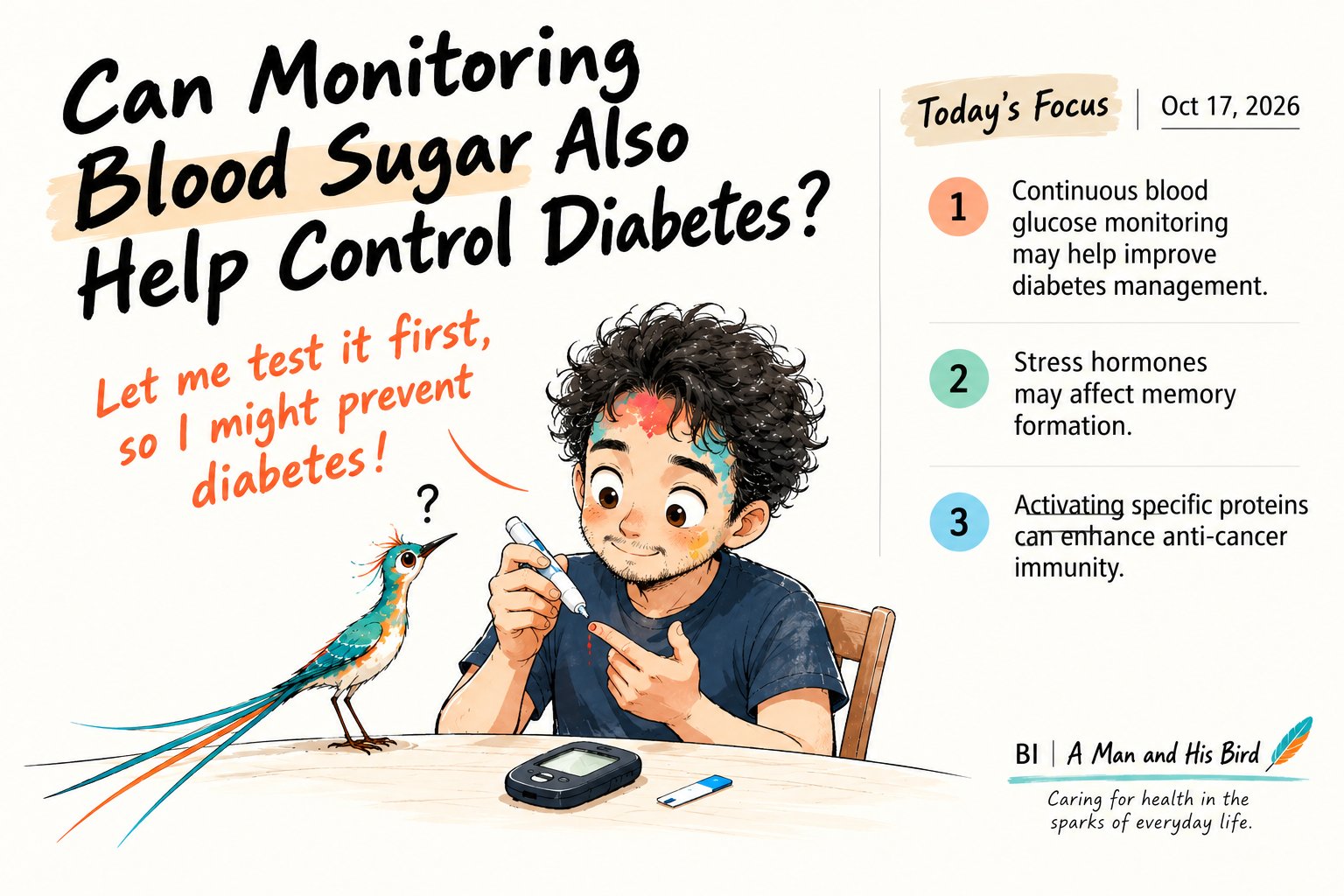
Today’s Health Science News | October 17, 2026
① Continuous Glucose Monitoring May Improve Blood Sugar Management
A study involving 283 people with type 2 diabetes who were not using insulin found that participants using continuous glucose monitoring (CGM) showed improvements in blood sugar management after six months, including HbA1c levels and time spent within the target glucose range.
Unlike traditional fingerstick testing, CGM provides ongoing glucose readings, allowing users to observe how meals, exercise, and daily activities affect their glucose levels.
These insights may help people make more informed decisions about diet, physical activity, and other lifestyle habits.
Importantly, the study involved people already diagnosed with type 2 diabetes. It does not demonstrate that regular glucose monitoring prevents diabetes in otherwise healthy individuals.
The research was sponsored by a CGM device manufacturer, an important consideration when evaluating the findings.
② How Do Stress Hormones Influence Memory Formation?
Researchers at Yale University recently reported new findings concerning the relationship between stress hormones and memory formation.
The research explores how cortisol and related hormonal pathways influence the brain’s ability to encode and consolidate emotionally significant experiences.
These findings may help explain why certain emotionally intense events remain particularly memorable.
However, the relationship between stress and memory is complex. Greater stress does not necessarily produce better memory, and prolonged or excessive stress may impair cognitive function.
③ Activating a Specific Protein May Strengthen Anti-Cancer Immune Cells
Researchers at Cold Spring Harbor Laboratory recently reported findings suggesting that activating the protein PPARD in certain immune cells may enhance their ability to use fatty acids for energy and improve their anti-tumor activity in experimental models.
The findings highlight the importance of cellular metabolism in immune function.
By influencing how immune cells produce and utilize energy, researchers may be able to develop new strategies for improving cancer immunotherapy.
However, this work remains at an early experimental stage and has not yet established an effective treatment for patients.
Scientific discoveries continue to reveal new possibilities for health management and disease treatment. Translating these findings into meaningful health outcomes requires further research and rigorous clinical validation.
Science & Education: BI 身体智慧 (Body Intelligence)
Professional Review: 林存默 (Thomas Lin)
Professional Community: ACPN — The Association of Certified Professional Nutritionists
This article is for science and health education only and does not replace professional medical advice, diagnosis, or treatment.