
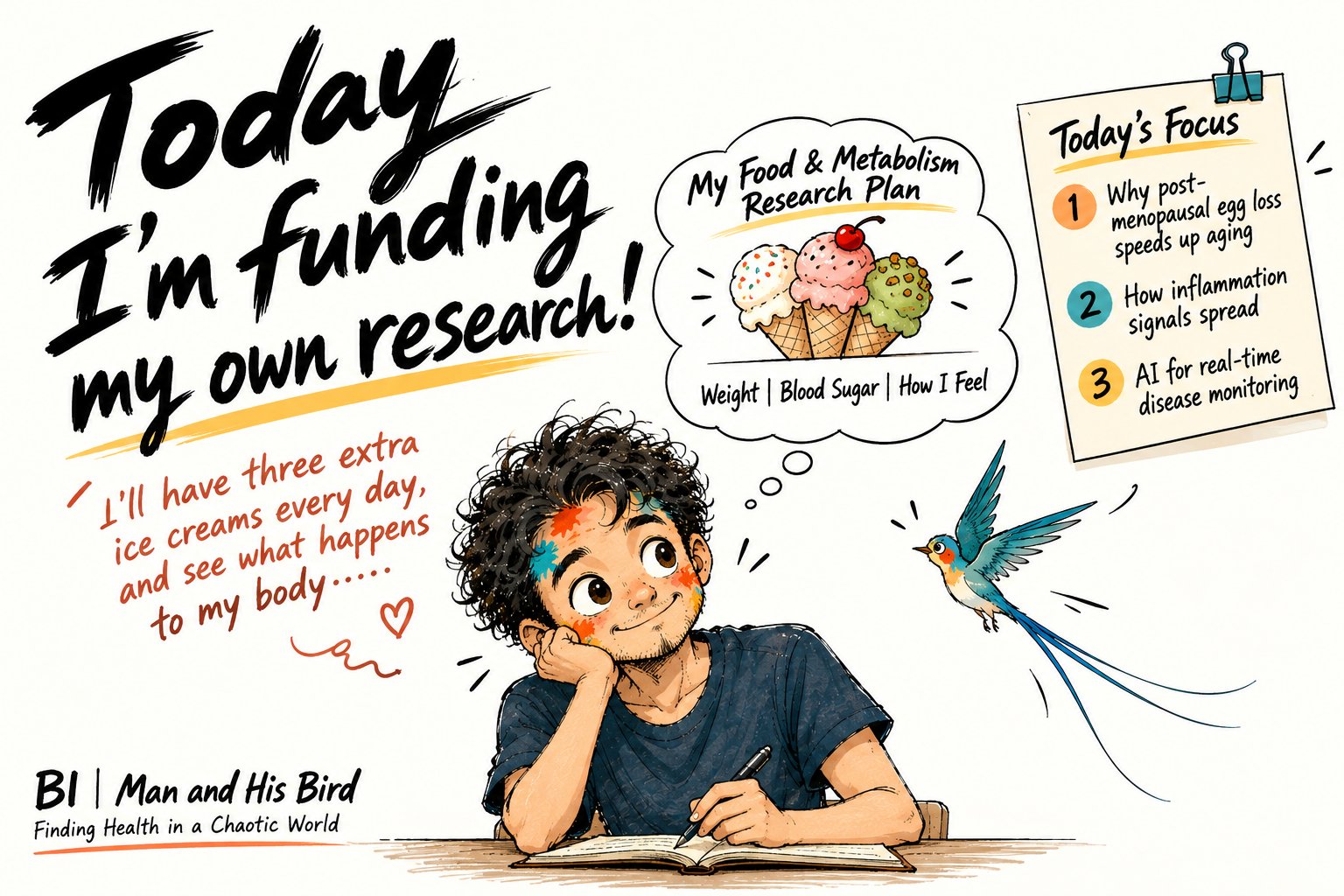
Today’s Health Science: Ovarian Aging, Inflammatory Signaling & AI-Powered Health Monitoring
🔬 1. Does Ovarian Aging Continue After Menopause?
Menopause marks a major transition in ovarian reproductive function, but it does not mean the ovaries stop undergoing biological changes.
Recent research has explored ongoing changes in postmenopausal ovarian tissue, including cellular aging, tissue remodeling, and inflammation-related processes.
These findings may help scientists better understand the relationship between ovarian aging and women’s overall health.
However, whether these changes directly affect other organs, and through which mechanisms, remains an important area for further investigation.
🔬 2. Inflammatory Signals May Spread Through Previously Unrecognized Mechanisms
Traditionally, many inflammatory signaling pathways begin when molecules interact with receptors on the surface of immune cells.
Emerging basic research suggests that certain inflammatory signals may continue to propagate through mechanisms that do not require ongoing receptor engagement.
These findings could improve our understanding of how inflammatory responses are amplified and sustained, potentially identifying new research targets for autoimmune diseases.
However, discovering a new signaling mechanism does not mean that a new treatment has already been established.
🔬 3. Artificial Intelligence Is Changing Epilepsy Monitoring
Epilepsy monitoring involves more than detecting abnormal electrical activity in the brain. It also requires distinguishing actual seizures from false alarms.
A recent small-scale study explored how patients could interact with an AI-assisted monitoring system through their smartphones, using patient feedback to improve seizure detection.
The findings suggest that this human–AI collaboration may substantially reduce false alarms and improve the practical usefulness of monitoring systems.
However, larger studies are needed to validate these results. AI-assisted monitoring should not be confused with independent AI diagnosis or treatment.
Today’s Scientific Perspective
Although these three research areas involve different biological systems, they reflect a broader direction in modern life sciences: moving beyond isolated organs, individual signaling pathways, and single biomarkers toward a more integrated understanding of human physiology.
For health management, the real challenge is not simply collecting more biological data.
It is understanding the physiological mechanisms behind those data and determining how scientific discoveries can be responsibly translated into reliable, individualized health services.
Science & Education: BI | Body Intelligence
AI-assisted Research & Illustration: BI × GPT
Professional Review: Thomas Lin
Professional Community: ACPN | Association of Certified Professional Nutritionists
This article is for science and health education only and does not replace professional medical advice, diagnosis, or treatment.
#HealthScience #OvarianAging #InflammationResearch #ArtificialIntelligence #EpilepsyResearch #HealthManagement #FunctionalNutrition #ACPN