
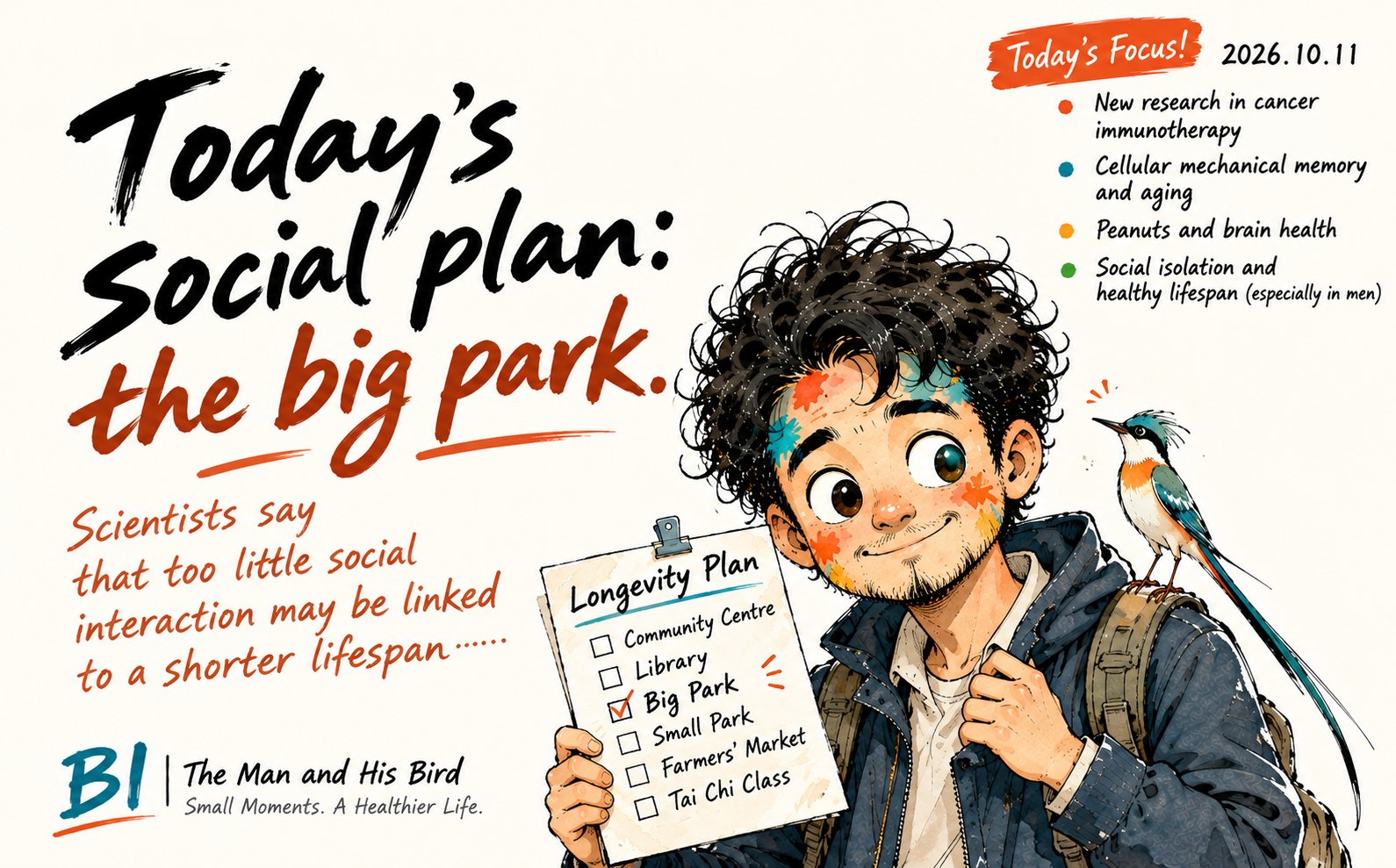
Health Technology Today | Four Scientific Research Updates
October 11, 2026
🔬 1. Cancer Immunotherapy: Encouraging Results in a Specific Type of Colorectal Cancer
An early clinical study involving patients with mismatch repair-deficient colorectal cancer reported promising outcomes following short-term immunotherapy before surgery.
Among 32 patients, no cancer recurrence was observed during nearly three years of follow-up.
These findings suggest that immunotherapy may play an important role in treating tumors with specific molecular characteristics. However, larger clinical trials are needed before the results can be generalized.
🧬 2. Cellular Mechanical Memory: A New Direction in Aging Research
Cells respond not only to chemical signals but also to physical forces, including pressure, stretching, and tissue stiffness.
Researchers are exploring mechanical memory, the ability of cells to retain the effects of previous mechanical stimulation even after the stimulus has disappeared.
This emerging field may help explain changes in tissue function, fibrosis, and cellular aging. Potential anti-aging applications remain investigational.
🥜 3. Peanut Consumption and Brain Insulin Responsiveness
A small randomized crossover study published in Food & Function investigated the effects of peanut consumption on brain physiology in 31 older adults.
After consuming 60 grams of unsalted roasted peanuts daily for 16 weeks, participants showed improvements in insulin responsiveness in certain brain regions.
Brain insulin signaling contributes to energy metabolism and neurological function.
However, these findings do not establish that peanut consumption prevents Alzheimer’s disease or cognitive decline.
❤️ 4. Social Isolation and Healthy Life Expectancy: An Important Concern for Men
A large population-based study identified associations between loneliness, social isolation, and reduced healthy life expectancy.
Men experiencing both loneliness and social isolation were estimated to have approximately 5.8 fewer years of life free from mental disorders such as depression and anxiety. The corresponding difference among women was approximately 3.7 years.
Importantly, these figures refer to mental-disorder-free life expectancy, not overall life expectancy.
Because the study was observational, it cannot establish that social isolation directly causes shorter life expectancy.
Nevertheless, the findings highlight the importance of social relationships, psychological well-being, and living environments alongside nutrition, physical activity, sleep, and metabolic health.
Together, these studies illustrate an expanding view of health science—connecting molecular mechanisms, nutritional metabolism, clinical innovation, and the social determinants of health.
—
Science & Education: BI Body Intelligence
AI-assisted Research & Illustration: BI × GPT
Professional Review: Thomas Lin
Professional Community: ACPN — The Association of Certified Professional Nutritionists
#HealthTechnology #CancerImmunotherapy #CellularAging #NutritionScience #SocialIsolation #HealthyAging #ACPN