
Author: BI Body Intelligence
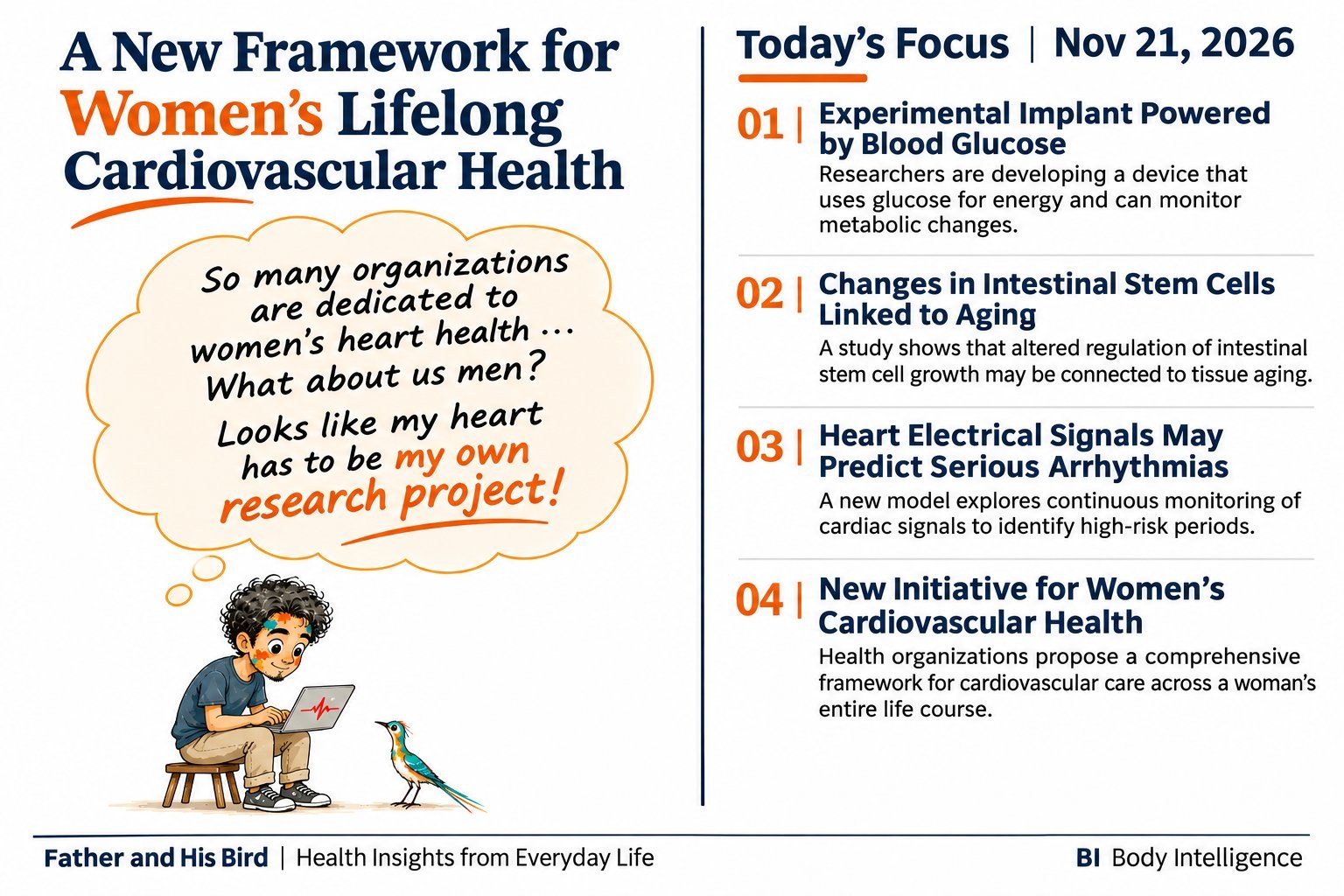
01 | Scientists Develop an Experimental Implant Powered by Blood Glucose
Researchers are exploring a new type of implantable technology that uses glucose fuel cells to generate electricity from glucose within the body.
Potential applications include continuous metabolic monitoring and the development of future devices for diabetes management.
Conventional implantable medical devices often depend on batteries or external power sources. Harnessing glucose as an energy source could offer an alternative for powering miniature medical technologies over extended periods.
However, this technology remains at an early experimental stage. Further research and clinical validation are required before it can be considered for routine human use.
02 | Changes in Intestinal Stem Cells May Be Linked to Aging
Recent research suggests that aging may alter the regulation of intestinal stem cell proliferation and renewal, potentially contributing to declining intestinal tissue function.
The intestinal epithelium is one of the body’s most rapidly renewing tissues. Its continuous regeneration depends on intestinal stem cells, which help maintain the intestinal barrier, nutrient absorption, and tissue repair.
Scientists are investigating how age-related changes in stem cell activity affect intestinal tissue stability and whether these mechanisms could become targets for future interventions.
These findings remain primarily within the field of basic biological research and do not yet establish a treatment for slowing human aging.
03 | Heart Electrical Signals May Help Predict Serious Arrhythmias
Researchers are investigating whether subtle changes in cardiac electrical activity can identify periods of increased risk for serious heart rhythm disturbances.
By analyzing electrical signals recorded by implantable cardiac devices, scientists are developing dynamic prediction models that may improve risk assessment for certain patients with heart failure.
Traditional cardiovascular risk assessments rely on medical history, electrocardiograms, cardiac imaging, and other clinical indicators.
Continuous monitoring may provide additional information about how cardiac risk changes over time.
These predictive models require further clinical validation and are intended to support, rather than replace, professional medical judgment.
04 | Medical Organizations Propose a Lifelong Framework for Women’s Cardiovascular Health
Leading cardiovascular health organizations in the United States are calling for a more comprehensive approach to women’s heart health across the entire lifespan, from childhood and adolescence through reproductive years, menopause, and older age.
Women’s cardiovascular risk is influenced by established factors such as blood pressure, cholesterol, blood glucose, smoking, and lifestyle, as well as sex-specific factors including pregnancy-related complications and menopausal changes.
Historically, women have been underrepresented in certain cardiovascular clinical studies, and some risk factors and clinical presentations have received insufficient attention.
The proposed framework emphasizes identifying risks at different life stages, improving prevention, and developing more individualized approaches to cardiovascular assessment and long-term management.
This initiative reflects a broader movement toward recognizing biological differences and improving preventive healthcare throughout the lifespan.
—
Science & Education: BI Body Intelligence
Professional Review: Thomas Lin
Professional Community: ACPN — The Association of Certified Professional Nutritionists
Disclaimer: This article is for health education purposes only and does not constitute medical diagnosis or treatment advice.