
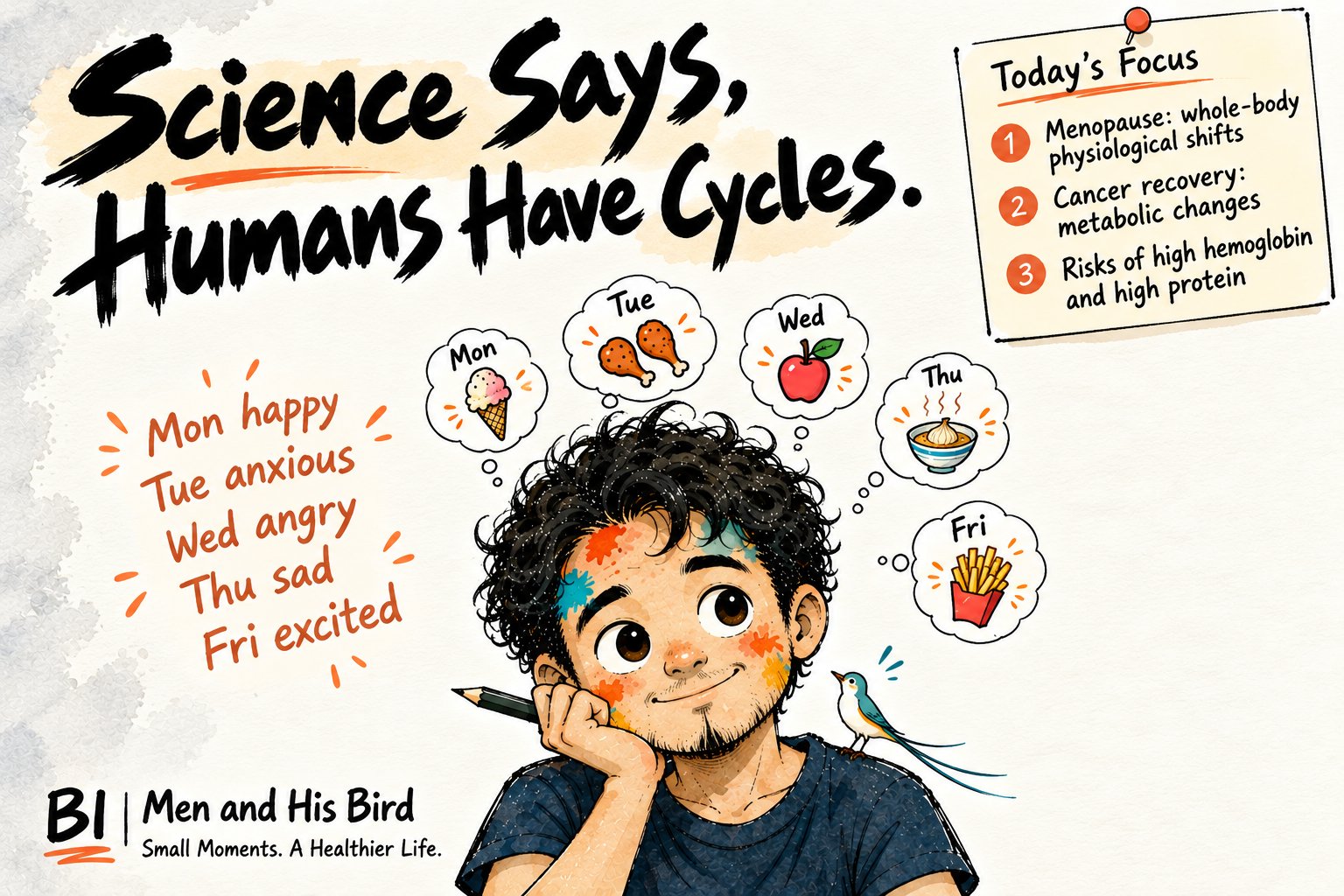
Today’s health science update highlights three areas of research: whole-body physiological changes during menopause, the metabolic mechanisms of cancer-related weight loss, and the relationship between hemoglobin levels and dementia risk.
1. Menopause: More Than a Reproductive Transition
Menopause is commonly associated with declining estrogen levels and the end of menstruation. However, emerging research is examining this life stage from a broader perspective, involving multiple organs and physiological systems.
Hormonal changes may be accompanied by shifts in lipid metabolism, bone health, cardiovascular regulation, and other physiological functions.
These findings suggest that menopause should not be viewed as a single biological event, but rather as a complex, multisystem transition with substantial individual variation.
Importantly, patterns observed in population studies cannot be used to predict health outcomes for individual women.
2. Cancer Cachexia: More Than Reduced Food Intake
When cancer patients experience weight loss, muscle wasting, and physical weakness, reduced appetite and inadequate food intake are often considered the primary explanations.
However, cancer cachexia involves more complex biological processes, potentially including systemic inflammation, altered energy metabolism, and changes in muscle and adipose tissue metabolism.
This helps explain why increasing calorie intake alone may not fully reverse weight loss and muscle deterioration in some patients.
Researchers are investigating how changes in body weight, biological markers, and tumor characteristics may help identify different metabolic patterns among patients.
These findings could eventually support more individualized nutritional care and comprehensive interventions. However, emerging research models should not be treated as established clinical diagnostic tools.
3. Hemoglobin and Dementia Risk: An Association Worth Investigating
Hemoglobin is the protein in red blood cells responsible for transporting oxygen throughout the body.
Recent observational research has examined the relationship between hemoglobin levels and the long-term risk of developing dementia.
The findings suggest that hemoglobin status may be associated with cognitive health over time.
However, hemoglobin levels are influenced by many factors, including age, sex, nutritional status, kidney function, inflammation, and underlying medical conditions.
An observed association does not establish that changes in hemoglobin directly cause dementia. Nor does it demonstrate that iron supplementation or increasing hemoglobin levels can prevent cognitive decline.
Further research is needed to clarify the underlying physiological mechanisms and clinical implications.
Today’s Scientific Perspective
Although these three research areas address different health conditions, they point toward a common scientific direction.
Human health cannot be fully understood by examining isolated biomarkers, individual symptoms, or single organs.
A more comprehensive understanding requires examining how organs, metabolic pathways, and physiological regulatory systems interact.
Health science continues to advance, but translating research findings into practical health management strategies requires rigorous evidence, careful interpretation, and professional judgment.
Science & Education:
BI Body Intelligence
AI-assisted Research & Illustration:
BI × GPT
Professional Review:
Thomas Lin
Professional Community:
ACPN — The Association of Certified Professional Nutritionists
This article is for science and health education only and does not replace professional medical advice, diagnosis, or treatment.
#HealthScience #Menopause #CancerCachexia #Hemoglobin #DementiaResearch #FunctionalNutrition #ACPN