
From Copper Metabolism and Liver Excretion to Copper Overload and Cell Death
Copper is an essential trace element involved in many physiological processes, including iron metabolism, antioxidant defense, connective tissue formation, and mitochondrial energy production.
However, copper also has another side. When the body’s systems for transporting, storing, and eliminating copper become impaired, excess copper can accumulate and contribute to cellular damage.
How can the same element support essential biological functions while potentially damaging the very cells that depend on it?
The answer lies in the body’s carefully regulated copper homeostasis system.
1. What Happens to Copper After It Enters the Body?
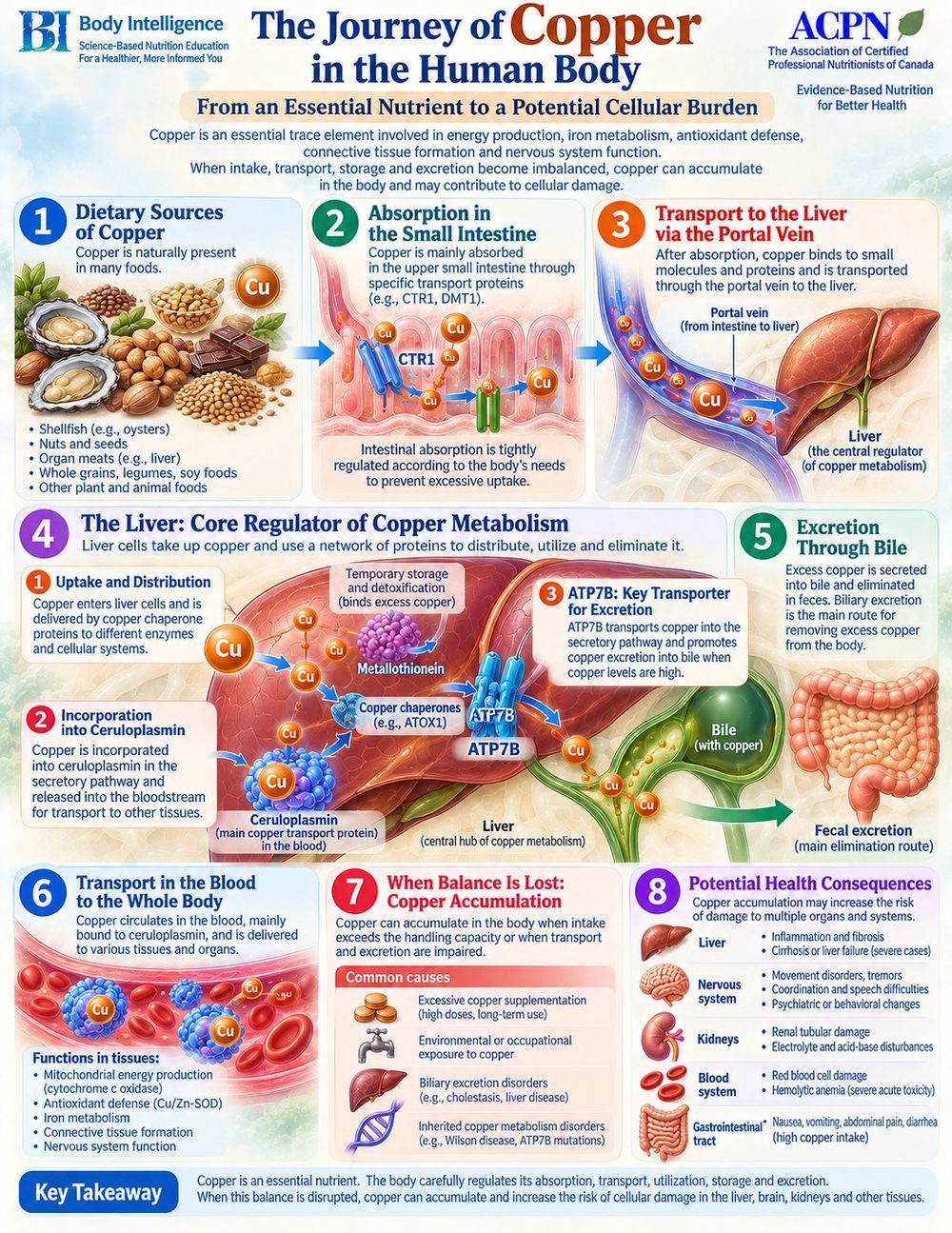
Dietary copper is primarily absorbed in the small intestine and transported through the portal circulation to the liver.
The liver is a central regulator of copper metabolism. It receives copper, distributes it to biological systems that require it, and eliminates excess copper through bile.
Once copper enters a cell, it does not simply circulate freely in the cytoplasm.
Because copper is a redox-active metal, cells must carefully control its distribution. Copper chaperone proteins, metallothioneins, and other regulatory systems help deliver copper to specific destinations while limiting potentially harmful reactive copper.
For example, copper is transported to mitochondria for the assembly of cytochrome c oxidase. It is also incorporated into enzymes such as copper-zinc superoxide dismutase, which contributes to antioxidant defense.
One particularly important protein is ATP7B, a copper-transporting ATPase found primarily in the liver.
ATP7B participates in copper delivery within the secretory pathway and promotes copper excretion into bile when copper levels increase.
Normal copper metabolism is therefore not simply a process of absorption. It is a coordinated system of uptake, transport, utilization, storage, and elimination.
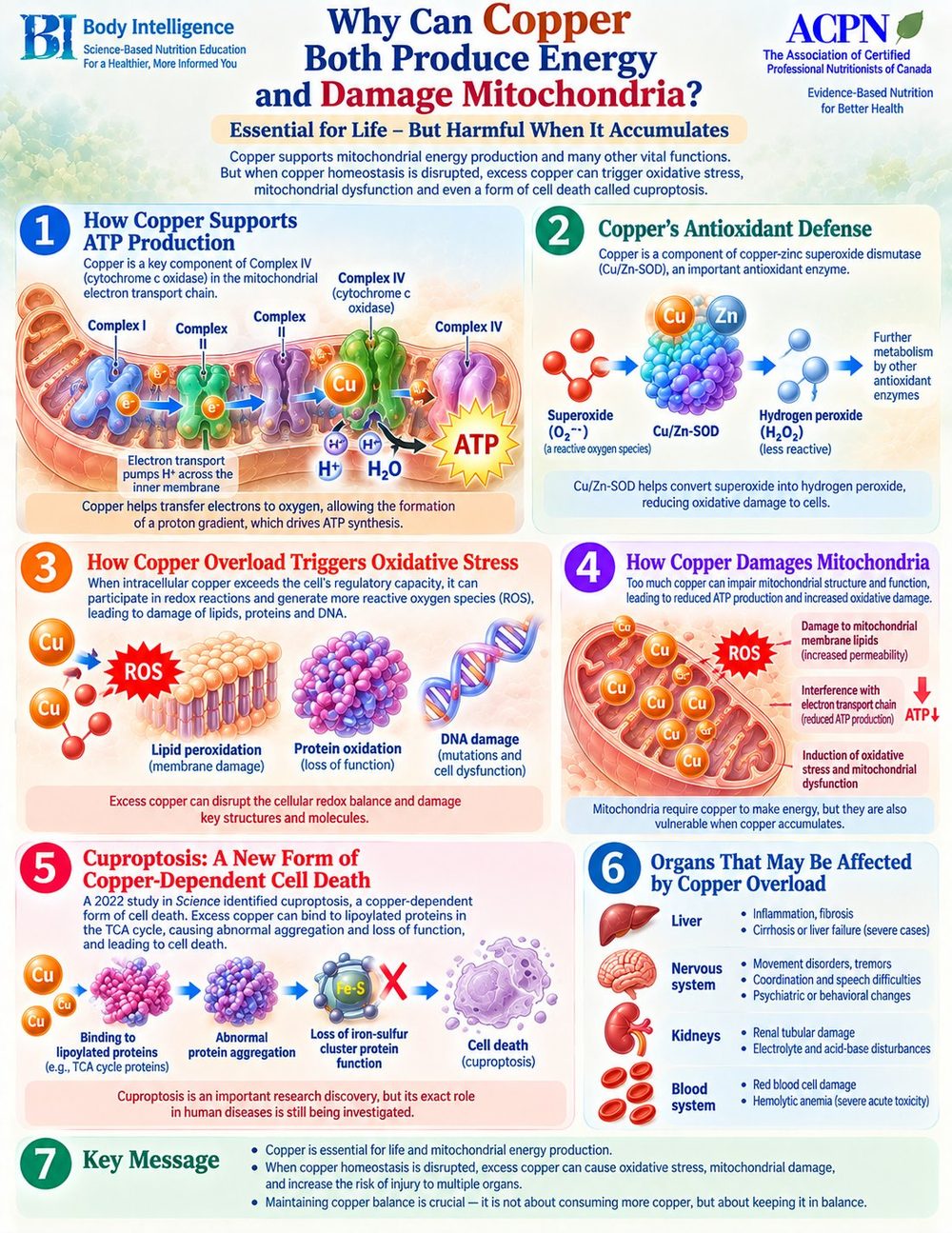
2. Why Does Copper Help Mitochondria Produce ATP?
Mitochondria are major sites of ATP production in human cells.
Within the inner mitochondrial membrane, the electron transport chain transfers electrons derived from nutrient metabolism through a series of protein complexes.
Complex IV, also known as cytochrome c oxidase, is the terminal enzyme of this chain.
It contains copper centers that participate in electron transfer to oxygen, allowing oxygen to be reduced to water.
This process contributes to the formation of the electrochemical proton gradient across the inner mitochondrial membrane.
ATP synthase then uses this gradient to produce ATP.
When copper availability becomes severely inadequate, the proper assembly and activity of Complex IV may be compromised, potentially impairing cellular energy metabolism.
Copper is not a fuel used to manufacture ATP. Instead, it is an essential component of the machinery that allows mitochondria to produce energy efficiently.
3. How Does Copper Overload Develop?
Copper overload does not necessarily mean that someone has consumed excessive amounts of copper-rich foods.
Under normal conditions, the body maintains copper balance through regulated intestinal absorption and biliary excretion.
Copper accumulation can occur when copper exposure exceeds the body’s handling capacity or when copper transport and elimination mechanisms become impaired.
Potential causes include excessive copper supplementation, certain environmental exposures, disorders affecting biliary excretion, and inherited copper metabolism diseases.
One particularly important example is Wilson disease.
Wilson disease is caused by pathogenic variants affecting ATP7B function.
When ATP7B does not function properly, the liver cannot effectively manage and eliminate copper. Copper may accumulate even when dietary intake is not unusually high.
During the early stages, copper accumulation may predominantly affect the liver.
As the disease progresses, copper dysregulation may also affect the brain, kidneys, and other tissues.
Copper overload may therefore result from excessive exposure, impaired transport, reduced elimination, or a combination of these factors.
4. How Does Copper Become a Cellular Burden?
Copper has an important chemical characteristic: it can alternate between different oxidation states.
This redox activity makes copper valuable in electron transfer reactions and many enzyme systems.
However, it also means that copper must remain under strict biological control.
Under normal conditions, copper is largely bound to proteins or other molecules that regulate its chemical reactivity.
When the amount of inadequately bound, reactive copper increases, copper may promote abnormal oxidative reactions and disrupt cellular redox balance.
Cellular membranes are among the structures that may be affected.
Membranes contain lipids, including polyunsaturated fatty acids that can undergo peroxidation. Excessive lipid peroxidation can damage membrane integrity and function.
Proteins may also be affected.
Oxidative modifications can alter protein structure, enzyme activity, cellular signaling, and protein quality-control mechanisms.
Severe disturbances in cellular redox balance may additionally affect DNA and other cellular components.
Importantly, copper toxicity is not explained by oxidative stress alone. Abnormal copper-protein interactions, disturbances in cellular metabolism, and stress-response pathways may also contribute.
The central problem is not the presence of copper itself, but the accumulation, distribution, and chemical activity of copper beyond the cell’s capacity to regulate it safely.
5. Why Are Mitochondria Particularly Vulnerable to Copper Overload?
This is one of the most interesting paradoxes in copper biology.
Mitochondria require copper for normal Complex IV activity, yet excessive or improperly distributed copper may interfere with mitochondrial structure and function.
When copper homeostasis becomes disrupted, several changes may occur.
First, abnormal oxidative reactions may damage mitochondrial membrane lipids and proteins.
Second, enzymes involved in mitochondrial metabolism may become impaired.
Third, severe damage to mitochondrial membranes and electron transport processes may compromise the electrochemical gradient required for ATP synthesis.
As a result, mitochondrial ATP production may decline.
At the same time, mitochondrial redox balance may become increasingly disturbed, creating interactions between oxidative stress, metabolic dysfunction, and cellular injury.
However, these mechanisms must be interpreted carefully.
A modest increase in dietary copper does not automatically produce mitochondrial damage.
The biological consequences depend on copper exposure, duration, tissue distribution, genetic factors, and the individual’s capacity to maintain copper homeostasis.
6. What Is Cuproptosis?
In 2022, a study published in Science described a copper-dependent mechanism of regulated cell death known as cuproptosis.
This discovery introduced an important additional dimension to our understanding of copper toxicity.
Copper may not only contribute to oxidative damage; under certain experimental conditions, it can also disrupt specific mitochondrial protein systems.
Researchers found that excess intracellular copper can interact with lipoylated proteins associated with mitochondrial metabolism, particularly proteins involved in the tricarboxylic acid (TCA) cycle.
These interactions can promote abnormal aggregation of lipoylated proteins and disturb iron-sulfur cluster protein homeostasis.
The resulting proteotoxic stress may ultimately trigger cell death.
Two aspects of this discovery are particularly important.
First, cuproptosis is closely connected to mitochondrial metabolic activity. It is not simply another name for excessive free-radical production.
Second, cuproptosis is an important experimentally characterized cell-death mechanism, but its precise contribution to human copper-overload diseases remains under investigation.
It should not be assumed that all tissue damage associated with copper overload occurs through cuproptosis.
Further research is needed to establish its significance across different human diseases and clinical settings.
7. Which Organs Can Be Affected by Copper Overload?
The Liver
The liver is a primary organ of concern because it plays a central role in copper distribution and biliary excretion.
Persistent copper accumulation can contribute to hepatocellular injury, inflammation, and fibrosis.
In severe copper metabolism disorders, progressive liver damage may result in cirrhosis or liver failure.
The Nervous System
The nervous system is another important target.
In Wilson disease, abnormal copper accumulation can affect specific brain regions and may produce tremors, impaired coordination, abnormal muscle tone, speech disturbances, and psychiatric or behavioral changes.
The Kidneys
Severe copper toxicity or systemic copper metabolism disorders may affect renal tubular function.
This can interfere with the normal reabsorption and excretion of substances involved in electrolyte and acid-base balance.
The Blood
Severe acute copper toxicity can damage red blood cells and may cause hemolytic anemia.
These effects demonstrate that clinically significant copper overload is not necessarily confined to a single organ.
It may become a systemic metabolic disorder affecting multiple physiological systems.
8. How Does Copper Interact with Zinc and Iron?
Copper metabolism cannot be fully understood in isolation from other trace elements.
Ceruloplasmin, a copper-containing protein with ferroxidase activity, contributes to normal iron mobilization and transport.
Severe copper deficiency may therefore interfere with iron utilization and contribute to anemia.
Zinc has a different but equally important relationship with copper.
Prolonged high-dose zinc supplementation can increase the expression of metallothionein in intestinal cells.
Metallothionein binds copper strongly, causing some copper to remain within intestinal cells.
As these cells are naturally shed, the bound copper is lost, reducing its absorption into the body.
This mechanism is also used therapeutically in the medical management of Wilson disease.
However, this does not mean that individuals who suspect copper overload should begin taking large doses of zinc independently.
Excessive zinc supplementation can itself cause copper deficiency, anemia, and neurological complications.
Nutrient interactions must be evaluated in the context of actual nutritional status, rather than attempting to suppress one element with another.
9. How Can Copper Overload Be Evaluated?
Copper overload cannot be diagnosed from nonspecific symptoms such as fatigue, headaches, or poor sleep.
Nor can it be reliably established from a single serum copper measurement.
Serum copper concentrations are influenced by ceruloplasmin levels, inflammation, hormonal status, and other physiological factors.
Clinical evaluation may involve medical history, potential copper exposure, liver function tests, serum ceruloplasmin, 24-hour urinary copper excretion, and, when appropriate, ophthalmological examination, genetic testing, or other specialized investigations.
Different tests provide different information.
The concentration of copper in the bloodstream does not directly represent the amount of reactive copper within individual cells.
Likewise, hair mineral concentrations alone cannot establish a diagnosis of copper overload or Wilson disease.
When copper metabolism disorders are suspected, particularly in individuals with unexplained liver abnormalities, neurological symptoms, or a relevant family history, appropriate medical evaluation is essential.
10. What Does Copper Balance Mean for Health Management?
The human body requires copper, but it does not benefit from unlimited copper intake.
For most people, a balanced diet provides sufficient copper to meet normal physiological requirements.
Additional copper supplementation does not necessarily improve health when copper status is already adequate.
A meaningful assessment of copper nutrition should consider three fundamental questions:
Is the body receiving an appropriate amount of copper?
Can copper be transported and utilized normally?
Can excess copper be effectively eliminated through the liver and biliary system?
Together, these processes determine whether copper can fulfill its essential physiological roles without creating unnecessary tissue burden.
The most important lesson from copper metabolism is not that copper is inherently beneficial or harmful.
It is that the biological effects of copper depend on homeostasis.
At appropriate levels, copper supports electron transport, iron metabolism, antioxidant defense, and connective tissue maintenance.
When copper regulation fails, the same element may contribute to oxidative injury, mitochondrial dysfunction, and damage to multiple organs.
The same nutrient can therefore produce very different biological outcomes depending on its concentration, location, chemical state, and metabolic context.
This is a central principle of BI Body Intelligence:
Understanding where nutrients function within the body’s metabolic networks is more valuable than simply memorizing a list of their benefits.
Science & Education: BI 身体智慧 (Body Intelligence)
AI-assisted Research & Illustration: BI × GPT
Professional Review: 林存默(Thomas Lin)
Professional Community: ACPN — The Association of Certified Professional Nutritionists (加拿大注册执业营养師公会)
This article is intended for science-based nutrition education and does not replace medical diagnosis, treatment, or individualized professional advice.
Scientific References
- Tsvetkov P, et al. Copper induces cell death by targeting lipoylated TCA cycle proteins. Science. 2022;375:1254–1261. DOI: 10.1126/science.abf0529.
- National Institutes of Health, Office of Dietary Supplements. Copper — Fact Sheet for Health Professionals.
- European Association for the Study of the Liver (EASL). Clinical Practice Guidelines: Wilson’s disease. Journal of Hepatology. 2012;56:671–685.